
There are seven core practices that are foundational to Student-Centered Coaching. We will touch on each core practice so that you are empowered to use them in your day-to-day work with teachers.
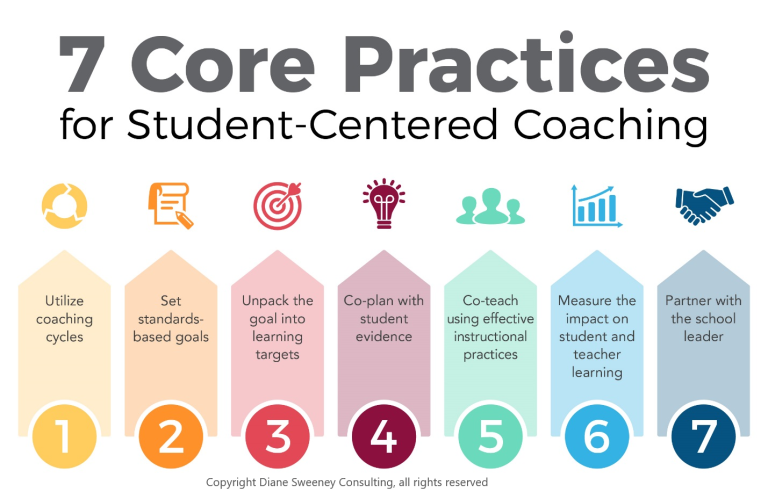
1. Utilizing Coaching Cycles
One-shot opportunities for professional development do little to improve student learning. Coaching cycles provide job-embedded professional learning that is ongoing and evidence-based. Taking a cyclical approach to coaching provides both the time that students need to reach the standard-based goal and the time that teachers need to develop their skills in delivering instruction that moves student learning forward.
2. Setting Standards-Based Goals
Coaching cycles are driven by goals for student learning rather than by what we think the teacher should be doing in the classroom. This keeps coaching cycles focused on student learning and protects the coach from being viewed as an evaluator.
3. Unpacking the Goal into Learning Targets/Success Criteria
Learning targets serve as a success criteria for what it takes for students to reach the goal that has been set. This ensures that when we are in coaching cycles or are working informally with teachers, we are focused and deliberate about what we teach and how we assess student learning.
4. Co-Planning with Student Evidence
Using student evidence means that we formatively assess on a continual basis. This creates opportunities to make informed instructional decisions throughout all types of coaching conversations. We sort student work based on the learning targets so we can identify patterns and then deliver differentiated instruction that matches exactly where the students are on any given day.
5. Co-Teaching Using Effective Instructional Practices
Student-Centered Coaching is based on a partnership approach where the teacher and coach work together in classrooms to assess student learning and respond with high leverage instructional moves. When co-teaching, it can sometimes be hard to tell the difference between a coach and a teacher because they are in sync and working side-by-side to collect evidence and act based on what is happening at any given moment.
6. Measuring the Impact on Student and Teacher Learning
As coaches, we have an obligation to make sure that our coaching is impacting student and teacher learning. Therefore we emphasize collecting data that captures the impact of our coaching cycles. We use the Results-Based Coaching Tool and a series of coaching logs to support this process.
7. Partnering with the School Leader
Coaches can’t do this work without the support of school leaders. Developing strong principal and coach partnerships is essential, yet we often find that principals are left out of many of the conversations that are taking place about coaching. Working with principals to establish clarity about what coaching is and isn’t, helping them learn how to be strong advocates, and planning how they will communicate high expectations around teaching and learning are principal behaviors that create a culture where coaching thrives.